Allow time for a respectful daylight visit. A temple visit, museum entry and an overnight templestay follow different arrangements.
Understand what makes Tongdosa different
Tongdosa traces its foundation to 643. It is an active place of Buddhist practice as well as a heritage destination, and belongs to the UNESCO Sansa group of mountain monasteries. Buddhist tradition associates the temple with sacred relics of the Buddha.
That religious role is central to understanding the site. Courtyards, halls and routes between them are used by worshippers, not simply arranged as an open-air museum. Begin by observing where visitors are invited to walk and which spaces are in use.
Courtyards, thresholds and the main hall
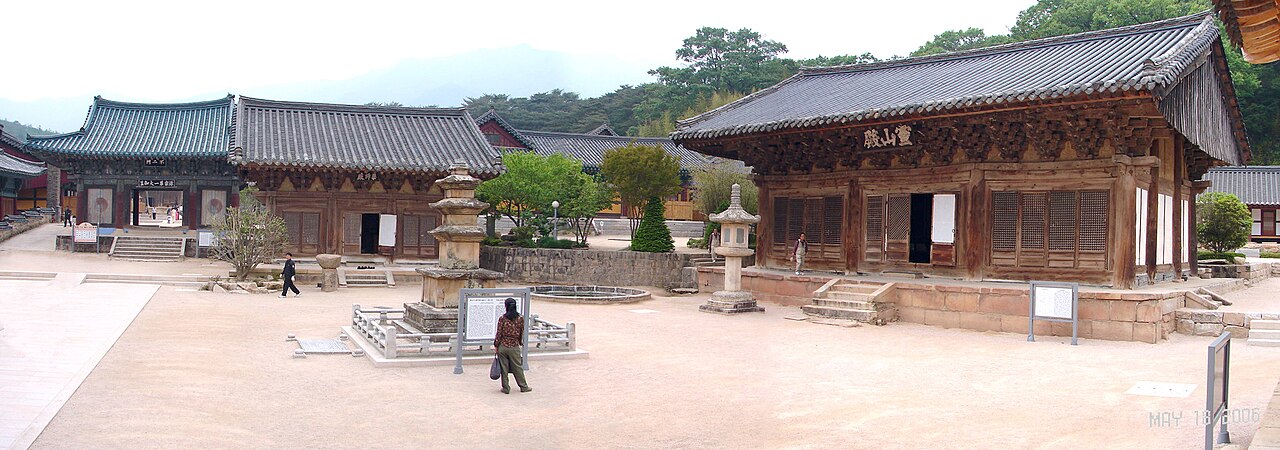
Move through the public courtyards toward Daeungjeon, pausing to notice how the different buildings frame open space. Look at rooflines, timber details and stone features without assuming that every hall is open for casual entry.
Quiet observation is often more useful than trying to see every interior. Follow local photography signs and give people praying enough space. Keep phones quiet and step aside from doorways; a small group taking photographs can easily block a route used for worship.
Plan your visit
| Practical detail | What to know |
|---|---|
| Address | 108 Tongdosa-ro, Habuk-myeon, Yangsan-si, Gyeongsangnam-do. |
| General admission | Free in the current tourism listing. |
| Visit planning | Choose daylight for the temple grounds; individual halls and programmes have their own access rules. |
| Buddhist Museum | Separate opening arrangements; listed closures include Mondays and Seollal/Chuseok holidays. |
| Templestay | A separate programme requiring its own booking and participation conditions. |
Build a visit around the monastery
Check the local journey to Tongdosa before deciding how much else to add. An unhurried temple visit works better than squeezing it between fixed bookings in distant cities. If the museum matters to you, arrange the day around its actual opening hours.
An overnight templestay is a different kind of visit: it may include a schedule and conduct requirements beyond normal sightseeing. Reserve through the appropriate programme rather than assuming you can join on arrival. For a simple day visit, bring comfortable shoes, keep to public paths and let the monastery’s daily activity set the tone.