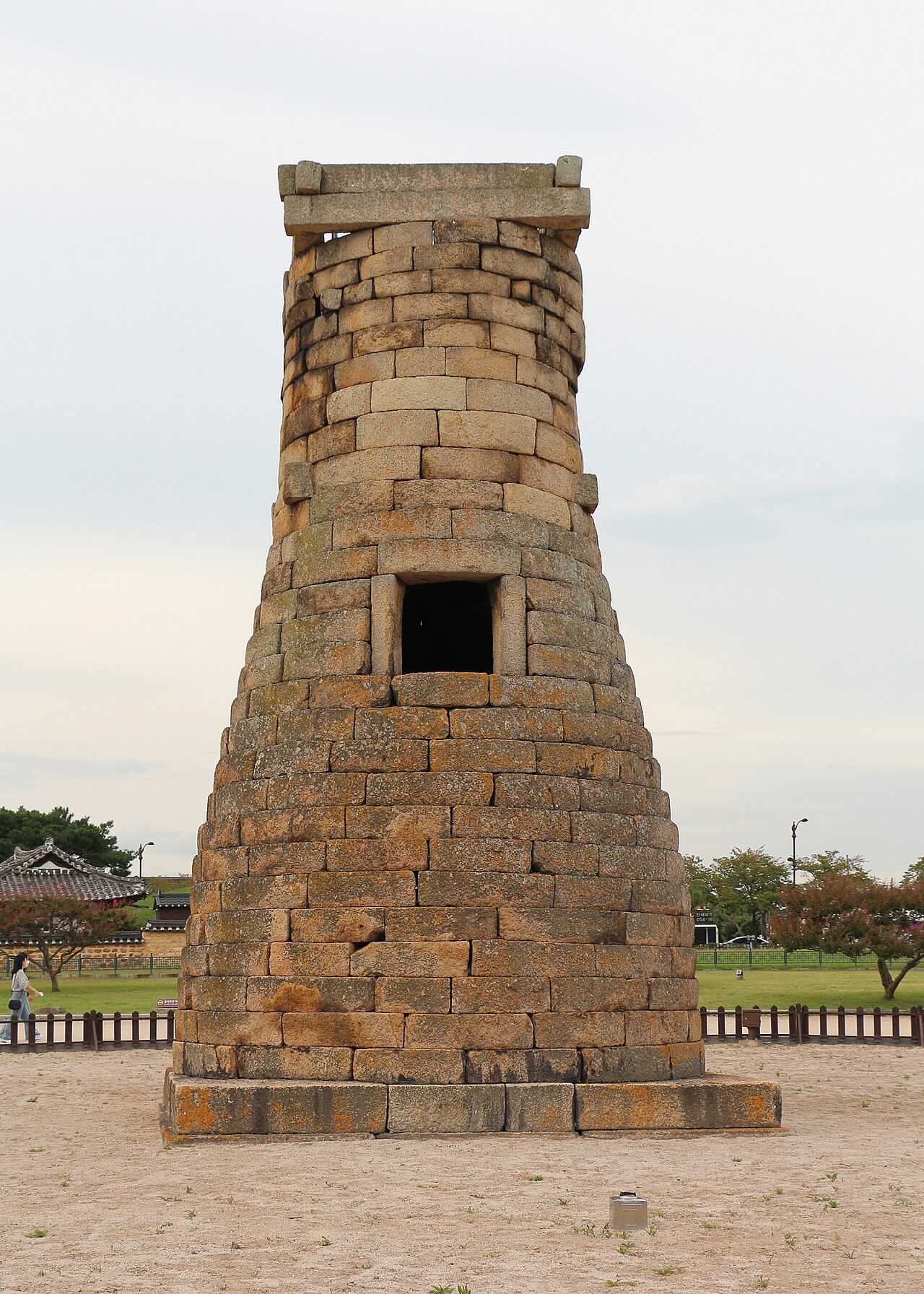
Cheomseongdae is an outdoor monument viewed from the grounds. It is not a tower you climb or an observatory offering night-sky sessions.
A surviving landmark of Silla
Cheomseongdae was built during Queen Seondeok’s reign, 632–647, when Gyeongju was the Silla capital. Around nine metres tall, it has a distinctive stone body, square opening and upper framework. Its scale is modest compared with the history associated with it.
Look at the structure itself before reading the symbolic interpretations of its stones and layers. Those interpretations add interest, but the most immediate impression is the careful relationship between its base, curved body and open surroundings.
Walk around it without rushing through
This is a place for viewing from outside, not climbing or entering the stone tower. Move around the public viewing area to see how its silhouette changes against the sky and nearby planting. Stay outside the protective boundary.
Seasonal flowers and evening lighting can change the setting, but neither a particular bloom nor a temporary light show is guaranteed. If you arrive primarily for photographs, leave some time to read about the observatory rather than making the garden colour the whole visit.
Plan your visit
| Practical detail | What to know |
|---|---|
| Address | 140-25 Cheomseong-ro, Gyeongju-si, Gyeongsangbuk-do. |
| Admission | Free. |
| Published visiting hours | Summer 09:00–22:00; winter 09:00–21:00. |
| Visit type | Outdoor monument and public viewing grounds; no climb inside the tower. |
| Other heritage stops | Daereungwon, Donggung and Wolji, and Woljeonggyo are distinct places. |
Choose a compact historic-centre route
Use Cheomseongdae as one stop in the central Gyeongju area. Pair it with a nearby heritage visit that interests you, then leave time for food or a rest rather than trying to cover every attraction in the national selection’s grouped entry.
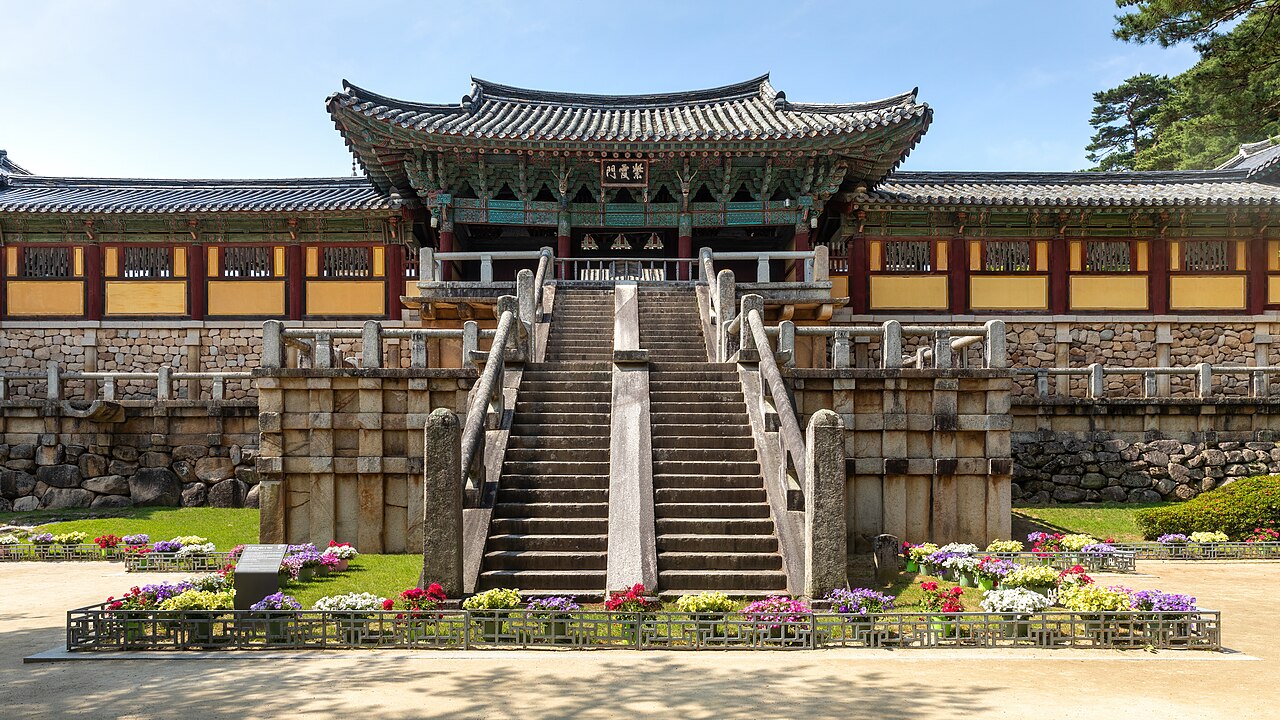
Bulguksa is a separate trip outside this immediate cluster. If you want both, account for that transfer rather than treating the temple as the next short walk. In warm weather the open grounds can feel exposed, so bring water and plan a break before continuing.