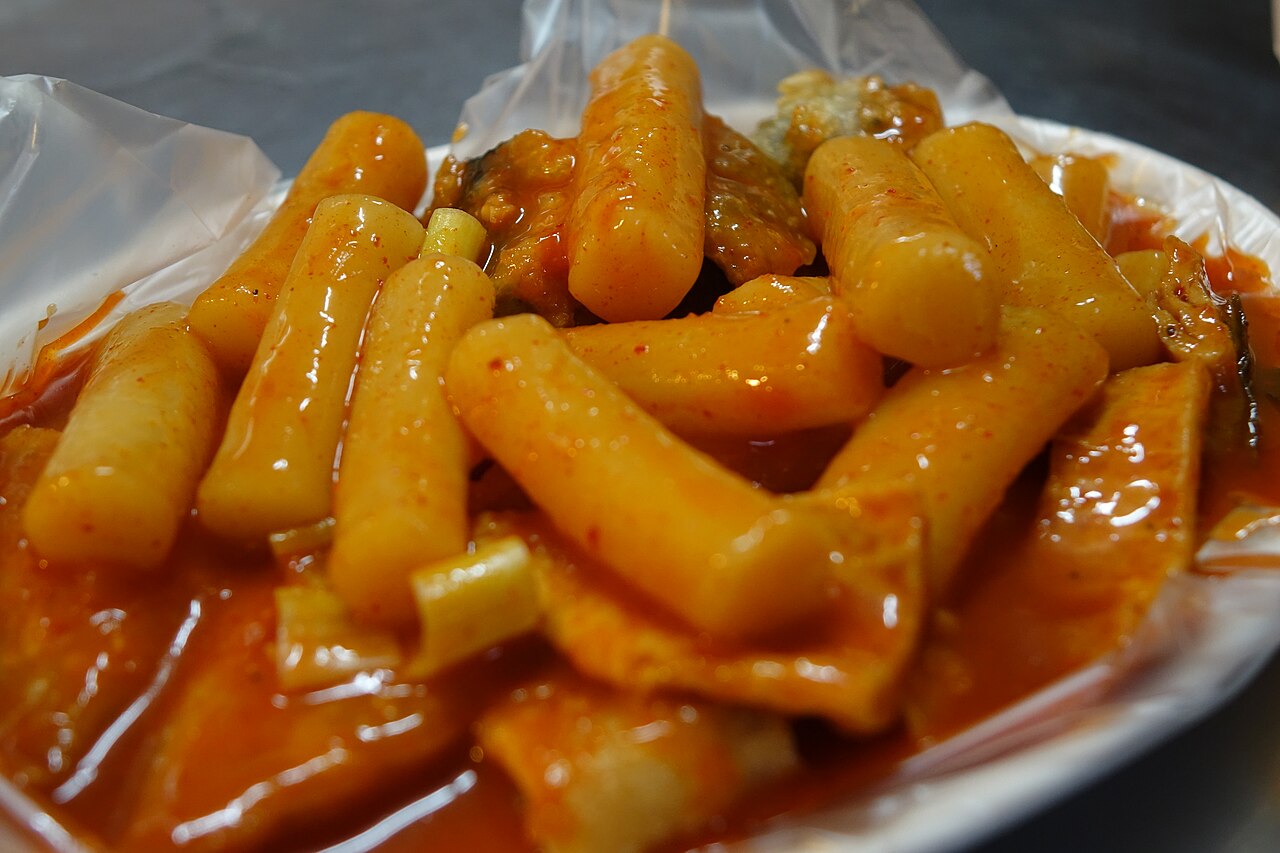
Fish cake and other additions can be part of the dish; rice cakes alone do not describe the whole ingredient list.
Rice cakes with a chewy centre
Tteokbokki combines rice-cake pieces with sauce; the familiar red version uses red-chili paste and often includes vegetables and fish cake. KTO also distinguishes a soy-seasoned version from the spicy style. The name covers more than a single fixed recipe.
Choose a small counter portion if you want a snack between visits. If you want a sit-down meal, check whether you are looking at a ready-cooked serving or a pot cooked at the table. The latter changes both the portion and the time you need to allow.
Ask what can actually be adjusted
Read the sauce description before choosing a spice level. A restaurant may offer different sauces or an adjustable fresh preparation, while a counter batch may already be cooked. Requesting less sauce is not the same as removing chili already used in cooking.
Start with a quantity your group wants to eat and add fried sides, noodles or dumplings only after checking what the base order includes. A photograph full of extras may show a set or additional purchases rather than the standard serving.
Check the rice cake, stock and additions
Ask about the actual rice-cake ingredients if wheat is relevant to your diet; a rice-cake description is not a gluten-free guarantee. Fish cake, stock and the sauce need their own checks. Cheese versions also change the dairy content rather than simply making the original recipe milder.
Let a hot serving cool before the first bite: sauce can cling to the rice cake. For takeaway, choose a suitable place to eat and dispose of the container properly instead of blocking the stall’s ordering space.
At the table
| What to check | A useful question |
|---|---|
| Serving | Is this a snack portion or a shared pot? |
| Spice | Is the sauce already prepared, or can the heat be changed? |
| Additions | Are fish cake, noodles or cheese included? |
| Dietary check | What is in the rice cake, broth and sauce? |