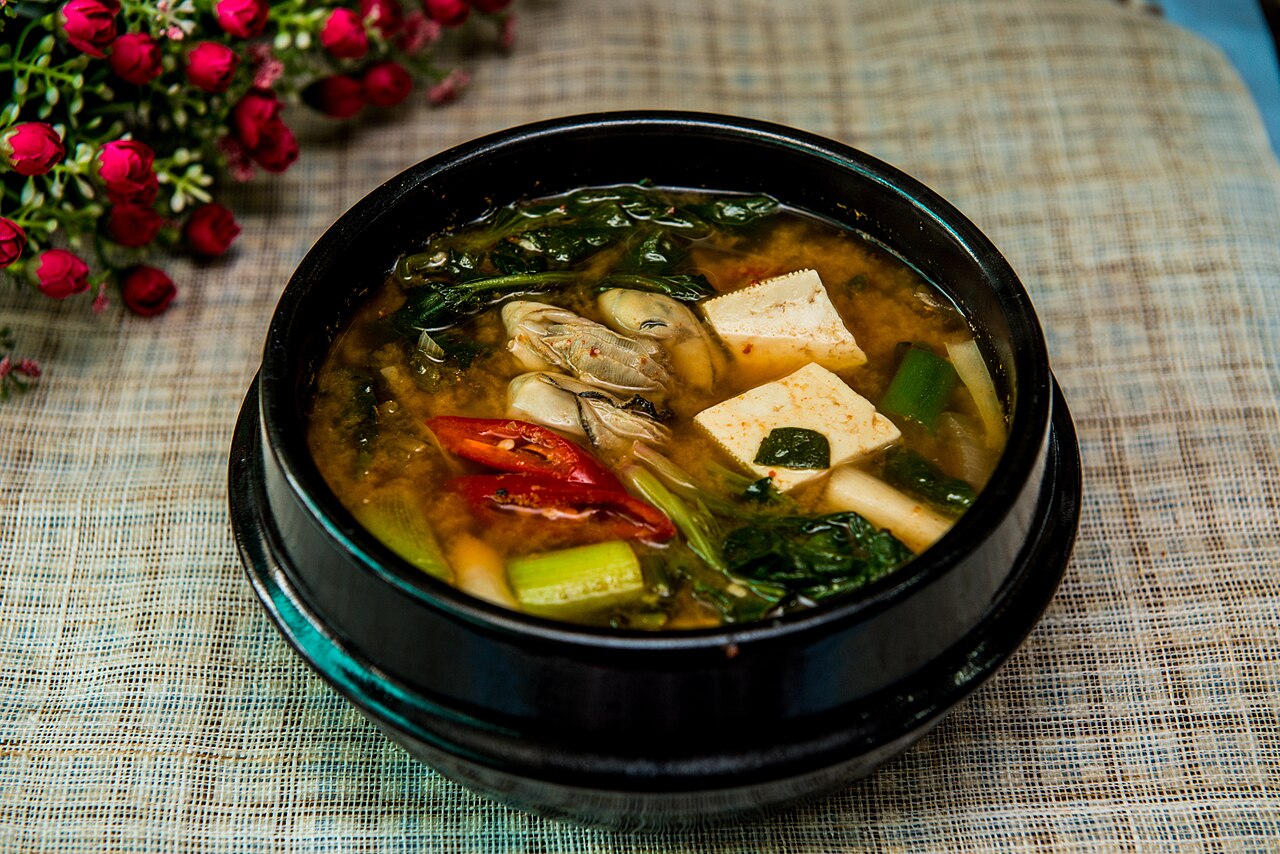
Tofu and vegetables do not make the whole dish vegetarian; KTO’s example also contains clams.
A savoury fermented-soybean flavour
Doenjang jjigae takes its character from fermented soybean paste. Tofu, mushrooms and zucchini are among the ingredients KTO describes, alongside clams in its example. Think of it as a family of savoury stews rather than one fixed tofu soup.
Choose it when you want to explore a different flavour from a red-chili kimchi stew. The colour alone is not a reliable measure of heat or seasoning, so ask about the particular version if you have a strong preference.
Check whether it is the meal or an accompaniment
A restaurant may present a stew with rice as an individual meal, while another menu may offer it alongside a meat order. Check the size and inclusions before deciding how much to order for your table.
For a simple lunch, look for a clearly described rice-and-stew arrangement. At a barbecue restaurant, ask whether the stew is included or an additional item, and whether one pot is intended for the whole group. This is more useful than assuming a familiar dish always arrives in the same portion.
Ask about the stock and seasonal additions
Doenjang supplies the soybean element, but the stock and additions need their own checks. Ask about shellfish, fish or meat instead of relying on the visible tofu. Seasonal herbs and vegetables may also differ from the menu photograph.
If you avoid an ingredient, establish whether it is optional or already in the prepared base. Taste the stew before seasoning further, and take care with a hot stone or earthenware pot. Keep a different meal option in mind if the kitchen cannot explain or adapt the stock.
At the table
| What to check | A useful question |
|---|---|
| Stock | Does the broth contain fish, shellfish or meat? |
| Additions | Are clams or other seafood included? |
| Portion | Is this a meal set or a side pot for the table? |
| Rice | Is rice included in the price? |