Kimchi is the starting ingredient, not proof of a meat-free meal. Check both the stew and the kimchi preparation.
The taste comes from matured kimchi
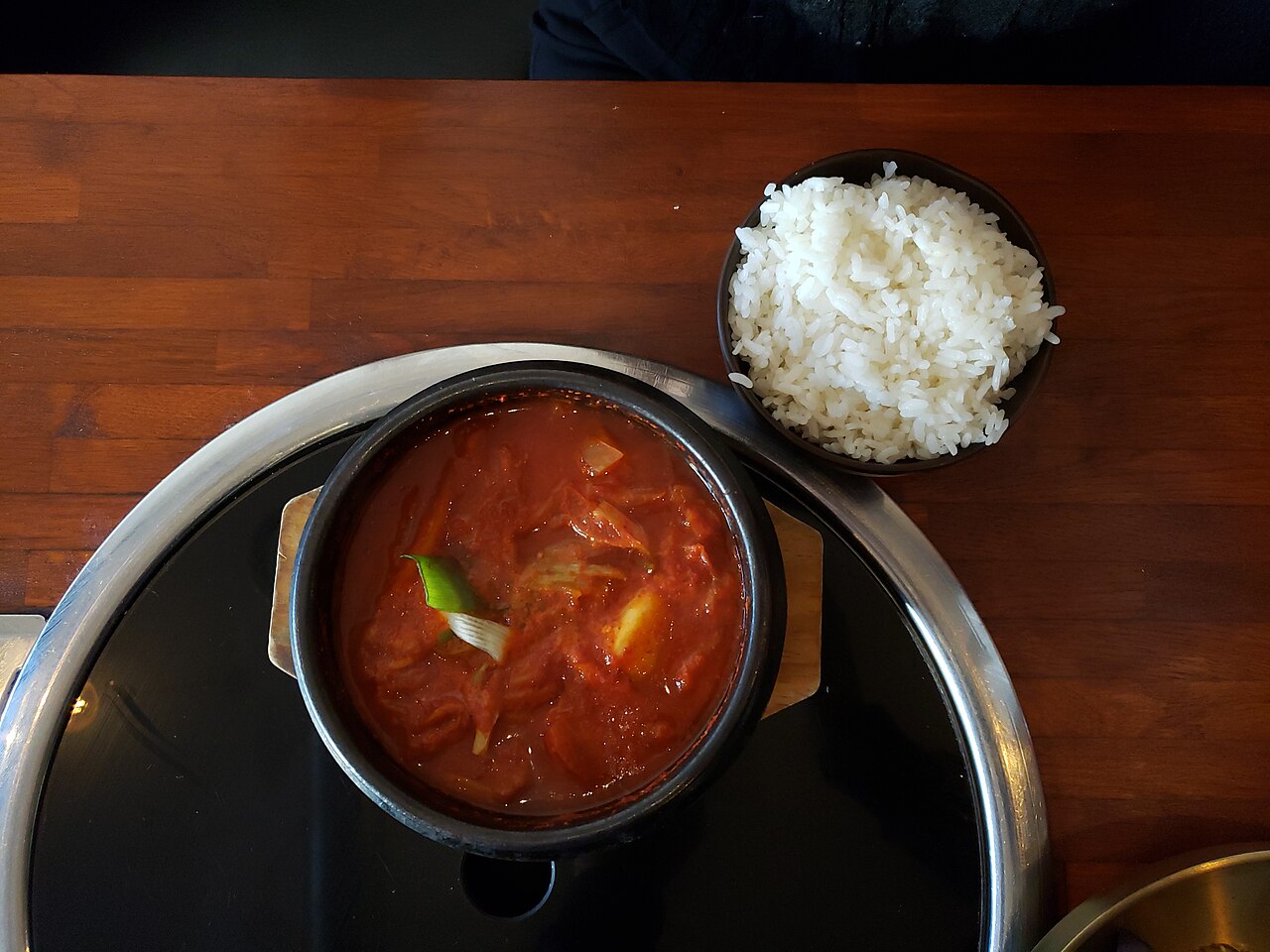
Kimchi jjigae uses matured kimchi to give the stew a sour, spicy character. KTO’s example combines it with pork. The balance of sourness, heat and richness changes with the recipe, so a bowl can taste quite different from freshly served kimchi on its own.
Choose it as a warm rice meal rather than assuming it is a small starter. Read whether the restaurant lists an individual bowl, a set or a shared pot; the word jjigae does not settle the serving arrangement.
Identify the main protein before ordering
Ask what accompanies the kimchi in this version. A restaurant may offer different recipes, and a familiar red broth does not tell you which meat, fish or stock has been used. Check the complete name rather than pointing only to a menu photograph.
If you are ordering for several diners, agree on how many servings and bowls of rice are needed. Ask whether the hot pot needs further cooking at the table and let staff explain the heat controls. Keep the serving space clear when the vessel is brought over.
Know which changes are realistic
Once kimchi, stock and seasoning have simmered together, leaving out a garnish does not remove ingredients from the base. Ask about any dietary need before ordering; a kitchen may not be able to make a prepared stew without a particular component.
Taste a cooled spoonful before adding condiments. Rice can be eaten alongside the stew at your own pace. If a spicy-sour meal is not what you want that day, compare a different dish rather than asking staff to turn an already prepared kimchi stew into something entirely different.
At the table
| What to check | A useful question |
|---|---|
| Protein | What meat or fish is in this kimchi jjigae? |
| Stock | What is the broth made from? |
| Serving | Is this an individual bowl or a pot for sharing? |
| Rice | Does this order include a bowl of rice? |