This is a shellfish dish; its soft texture does not make it suitable for every diet.
Understand what gives it its flavour
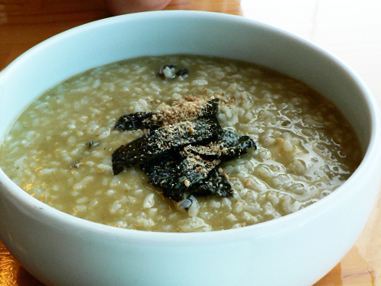
Jeonbokjuk combines rice with sliced abalone in a porridge. KTO notes that including abalone intestines can produce a yellow-green tone and a different flavour. Colour therefore reflects preparation, not a reliable measure of how much abalone is served.
Choose it when a spoon-based rice meal appeals to you. Avoid judging a particular restaurant’s ingredients or quality solely by whether the bowl matches one photograph.
Check the serving before choosing it for lunch
Ask whether the order is a full meal and what accompaniments are included. A small breakfast bowl and a larger restaurant serving may fit very different plans for the rest of your day.
If you want to compare versions, ask whether the preparation uses the intestines and how the broth is made. The answer is more useful than assuming every pale or greenish porridge has the same recipe.
Separate texture from dietary suitability
Abalone is shellfish, and the broth or garnish may introduce additional ingredients. Ask about these explicitly if you have a restriction. A dish served soft or mild is not automatically an appropriate choice for an allergy or medical need.
Allow time for the bowl to cool and ask about takeaway arrangements if you cannot stay. If you want an early breakfast before a sightseeing day, confirm the restaurant’s opening time rather than assuming a porridge dish will be available in the morning.
Before you order
| Check | Ask the restaurant |
|---|---|
| Preparation | Does this version include abalone intestines? |
| Stock | What broth and seasonings are used? |
| Meal | What portion and accompaniments are included? |