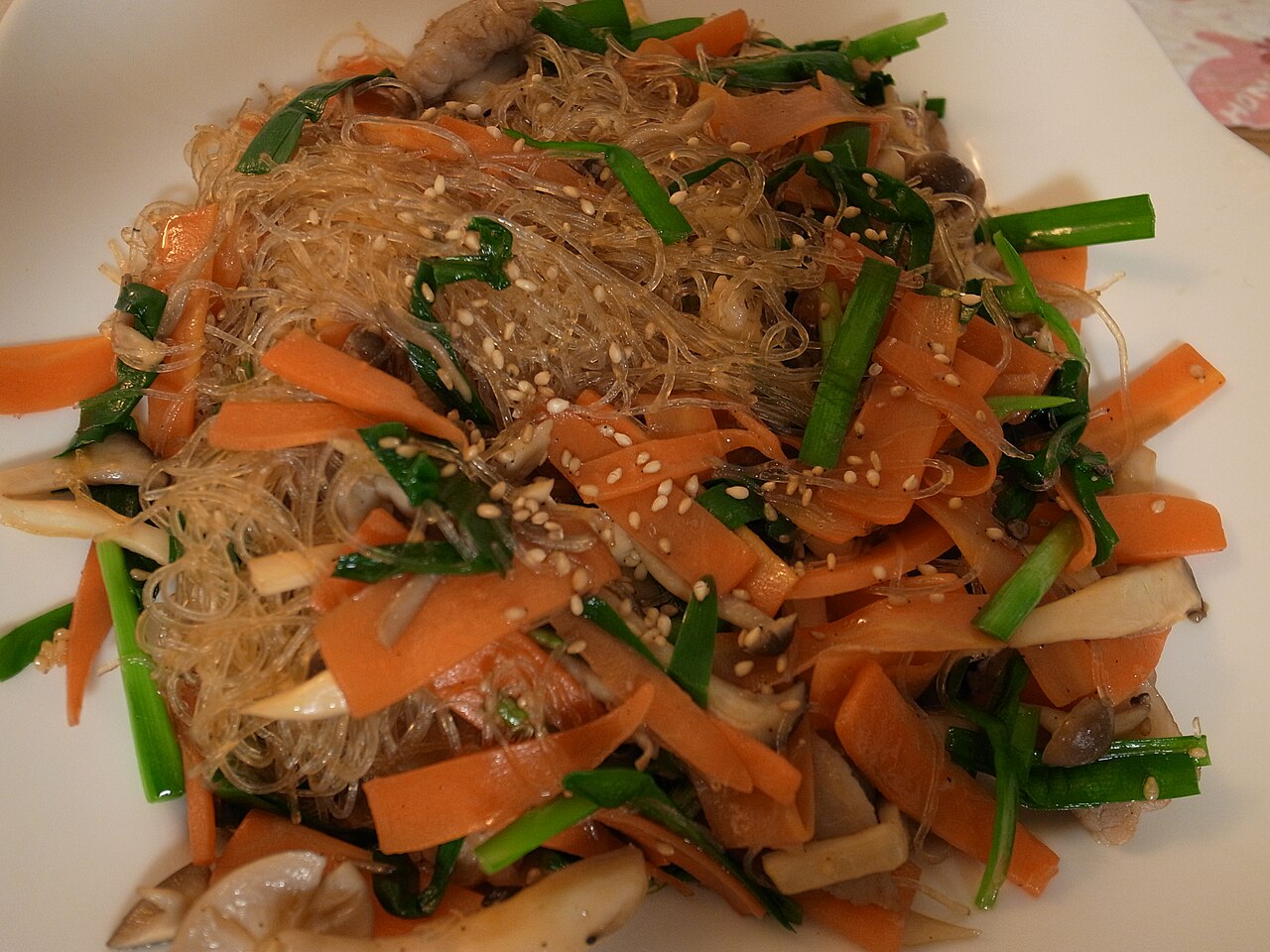
Japchae can contain thinly sliced meat; the clear noodles and vegetables do not make the whole plate vegetarian.
What makes it different
Japchae combines glass noodles with vegetables, mushrooms and, in the KTO example, thin slices of meat. Soy sauce is part of that example’s seasoning. Its glossy strands and mixed ingredients give it a different texture from noodles served in a bowl of broth.
Look for it when you want a dish that several diners can taste alongside a main meal. A stand-alone plate, a small accompaniment and japchae served over rice are different orders; ask which format the menu offers.
Match the plate to the rest of your order
If your table is already ordering dumplings, pancakes or a meat platter, ask how large the japchae is before adding another full dish. If you want lunch for one person, check whether a rice version is available and what the set contains.
Separate the decision about serving size from the decision about spice. A dish without an obvious red sauce can still have ingredients or seasoning you avoid. Ask about the particular preparation instead of relying on the photograph.
Check the whole preparation
For dietary restrictions, ask about meat, sauce and any garnish, as well as the noodles themselves. A kitchen may mix a batch before service, so removing visible meat might not be an option.
Use a small first serving if you are sharing unfamiliar dishes. That leaves room to compare textures without everyone ordering the same large plate. Ask for serving utensils when the dish is placed in the middle of the table.
Before you order
| Check | Ask the restaurant |
|---|---|
| Format | Is this a sharing plate, side dish or rice meal? |
| Ingredients | Does this version contain meat? |
| Seasoning | What is in the sauce and garnish? |