A bean-based sauce can contain pork; the dish name is not a vegetarian label.
Identify the sauce and noodles
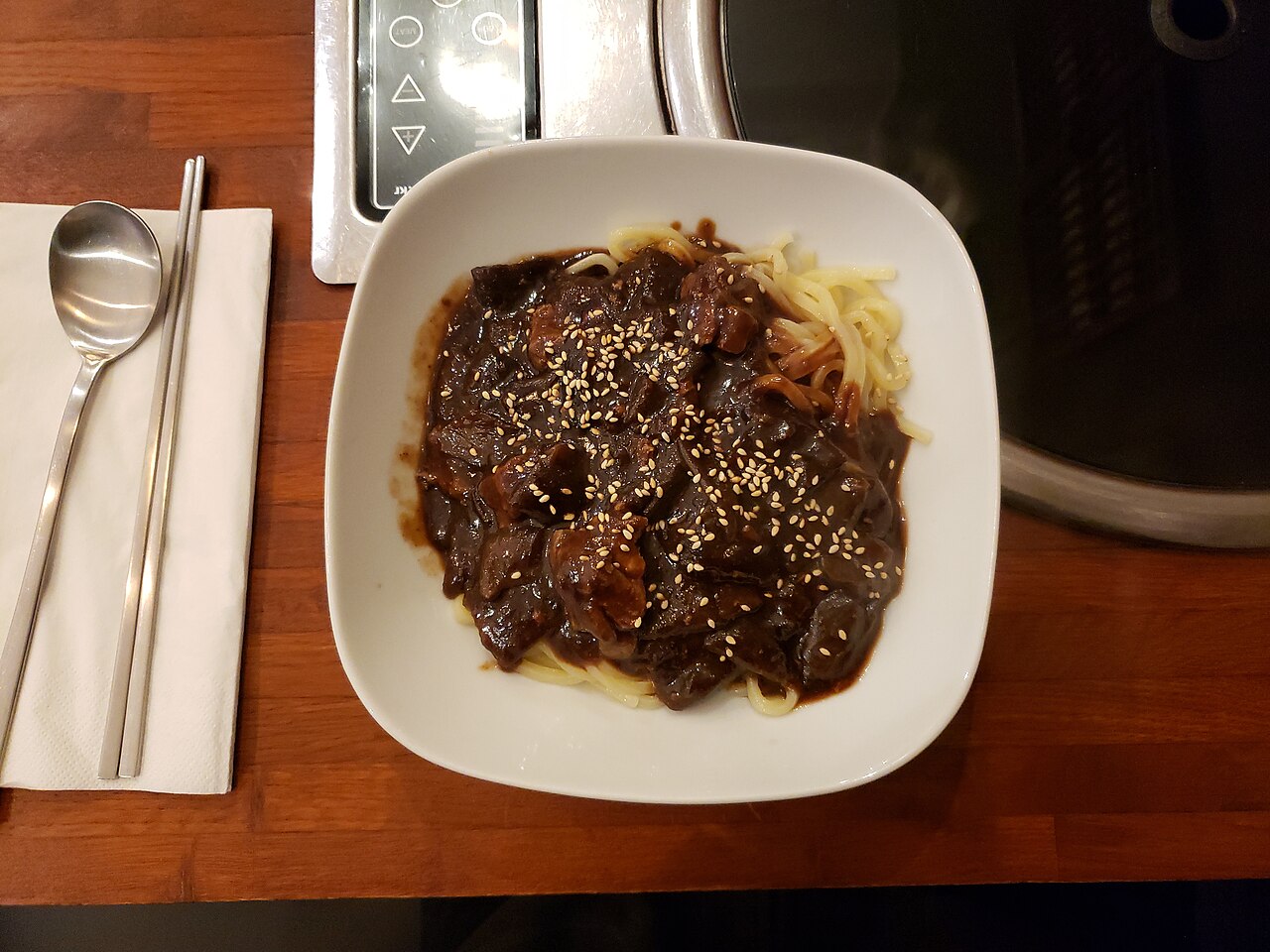
Jjajangmyeon is a Korean-Chinese noodle dish with a dark bean sauce. KTO’s example includes chopped pork, onion and squash with wheat-based noodles. The dark colour is not the same signal as a red chili broth.
It can be a useful choice when comparing Korean-Chinese noodle dishes, but ask about the restaurant’s exact version. Colour and a familiar bean ingredient do not establish the seasoning or dietary suitability.
Choose noodles, rice and sides deliberately
Check whether the pictured order is the noodle dish alone or a combination with other items. If your table wants to share a side, choose that separately instead of accidentally duplicating a set for every diner.
Mix the sauce through the noodles in the bowl before judging the flavour. Take care with splashes, especially if you are eating before an event or travelling with luggage in a small dining area.
Ask before requesting substitutions
If avoiding pork or wheat, ask about both the sauce and noodles before ordering. A prepared sauce cannot necessarily be changed by leaving out a visible garnish.
When ordering takeaway, ask what is packed separately and when it is intended to be eaten. For a first try, eating on site avoids making assumptions about how the restaurant packages or reheats the dish.
Before you order
| Check | Ask the restaurant |
|---|---|
| Sauce | Does this sauce contain pork? |
| Set | Is this noodles only or a combination meal? |
| Noodles | What are these noodles made from? |