Despite potatoes in many versions, this is a meat-and-bone stew.
Bones, greens and a seasoned broth
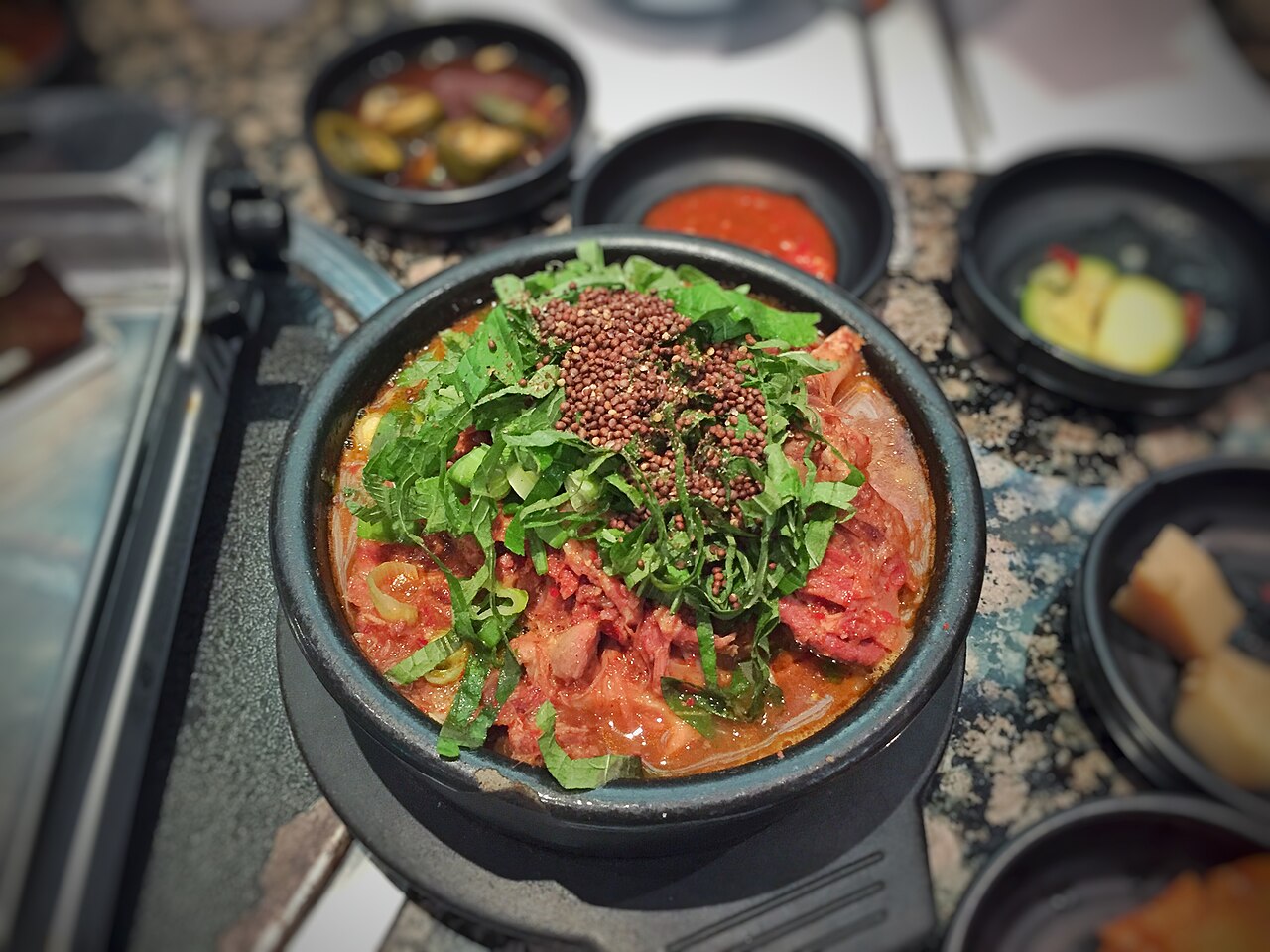
Gamjatang uses pork backbone in a spicy stew. KTO describes potatoes, cabbage and perilla powder, and notes that greens or aged kimchi can vary between restaurants. Those changes affect texture and flavour as well as the visible appearance.
Read it as a substantial pork dish rather than a vegetable soup. Ask the restaurant to explain the version on its menu if the accompanying photograph is unclear.
Decide whether you need a pot or an individual meal
Check whether the listed size serves one person or several. If you want a quick solo lunch, ask which option is intended for an individual diner rather than choosing a sharing size by price alone.
At a shared table, decide about rice and additional dishes together. Ask before adding noodles or a finishing course; those items may be optional and should not be assumed part of the starting price.
Take your time with the bones
Let the meat cool enough to separate comfortably and use a spare plate for bones. If cooking continues at the table, ask staff about the burner rather than changing the heat without understanding the setup.
For an efficient meal, ask staff when the pot is ready to eat and how to manage any later additions. Keep space on the table for the burner, side dishes and plates instead of balancing personal belongings beside the hot pot.
Before you order
| Check | Ask the restaurant |
|---|---|
| Size | How many diners is this pot for? |
| Greens | Does this version use cabbage, dried greens or kimchi? |
| Extras | Are rice, noodles or a finishing dish extra? |