Check how the rice is served and which pork components are included; recipes and ordering styles differ by restaurant.
A pork broth with rice
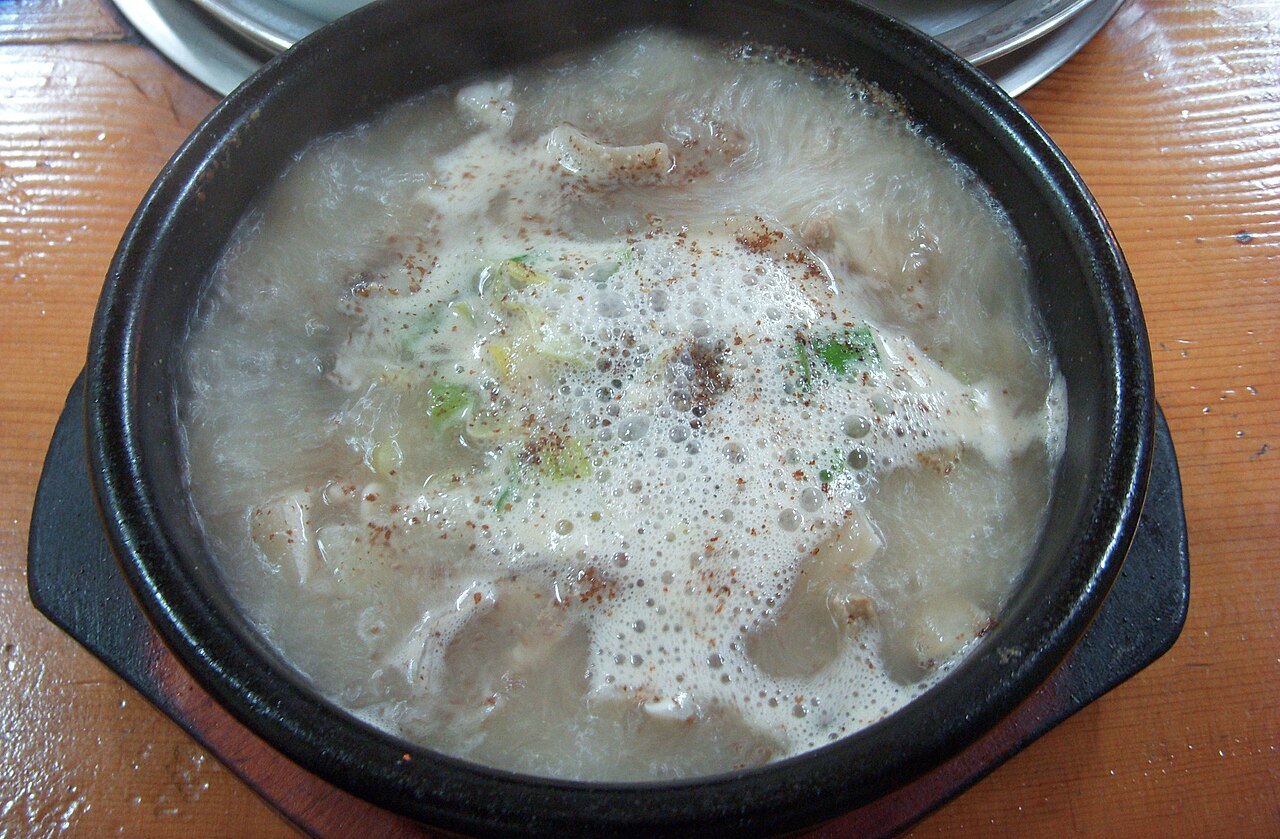
Dwaeji gukbap is a pork-and-rice soup strongly associated with Busan. KTO describes sliced pork and rice in a broth made from pork bones, and connects the dish’s local story with refugees during the Korean War. It is a meal to sit down with, rather than a small tasting cup.
Build a Busan food stop around the restaurant’s actual location and opening hours. The regional association does not mean every soup restaurant serves the dish or that one famous queue is the only way to try it.
Clarify the bowl you are choosing
Read the menu for the pork components and the rice arrangement. Ask whether rice is already in the soup or served alongside, and how large the portion is. If a restaurant lists several versions, have staff explain the difference instead of choosing only by price.
For a first taste, begin with one clearly described meal. If your group also wants a shared meat platter or other extra, check whether the soup order already provides the amount of food you want before adding it.
Taste before adding salted condiments
KTO notes that diners may add salted shrimp or salt to suit their taste. Try the broth first and add seasoning gradually. Treat any chili paste or other accompaniment as another choice, not something that has to be mixed in immediately.
The soup is a pork dish even when the broth looks pale. Ask about stock, meat and the supplied condiments separately if you avoid an ingredient. Check where to pay after the meal and keep the onward connection in mind if this is a stop between a city walk and a train journey.
At the table
| What to check | A useful question |
|---|---|
| Rice | Is the rice in the soup or served separately? |
| Pork | Which cuts or other pork components are in this bowl? |
| Seasoning | Which condiments are already in the soup? |
| Extras | Is this a complete meal, or should rice be ordered separately? |