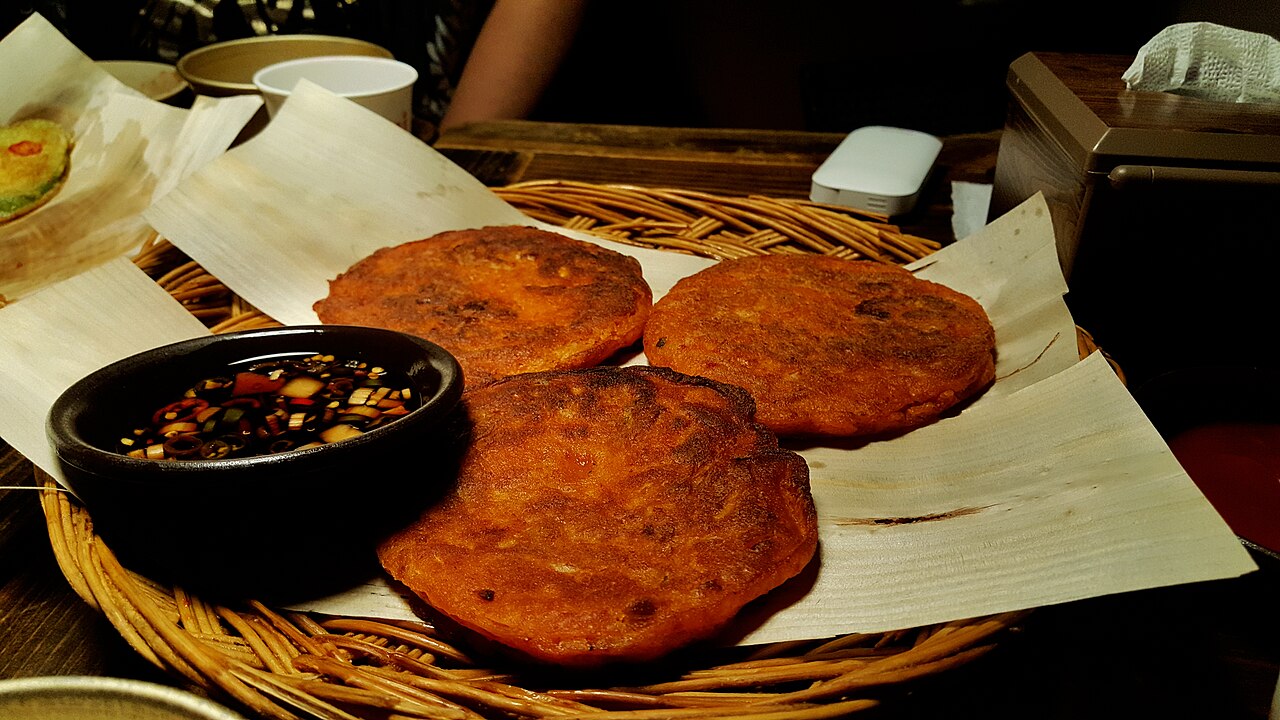
Mung beans form the batter, but pork and other additions may also be present.
A different texture from pajeon
Bindaetteok is made with a ground mung-bean batter. KTO’s example includes pork, mung-bean sprouts and bracken, producing a thicker pancake than the familiar seafood-and-green-onion comparison. It is not simply pajeon with a different garnish.
Choose it when you want to compare Korean pancake styles. Check the version being cooked rather than relying on the word bean to infer a meat-free meal.
Treat a market stop and a full meal differently
Ask whether the price is for one pancake, a portion or a set. If several people want to taste it, one shared order can leave room for other foods without turning a short stop into several full meals.
Ask how it is served and where you can eat it. Do not assume a takeaway purchase gives access to another stall’s seating, or that a restaurant’s table service works like a market counter.
Check the batter and additions
Clarify whether pork or seafood is used and ask about the batter and dipping sauce if you avoid a particular ingredient. The base ingredient alone cannot establish allergen suitability or what else the kitchen handles.
Let the cooked pancake cool enough before taking a large bite. For a first comparison, try a small piece before adding dipping sauce; this makes the mung-bean texture easier to distinguish.
Before you order
| Check | Ask the restaurant |
|---|---|
| Filling | Does this pancake contain pork or seafood? |
| Portion | Is this one pancake or a set? |
| Service | Is seating included with this order? |