Choose the length of your walk first, and check the ecology centre separately from the outdoor wetland.
Visit a habitat, not a single viewpoint
Upo is a wetland landscape in Changnyeong, Gyeongsangnam-do. Its lakes, ponds and marshes support fish, plants and birds, including species that breed, stop over or spend the winter here. The Ramsar record identifies Upo as site 934, designated in 1998. This ecological role is the reason to make time for slow observation.
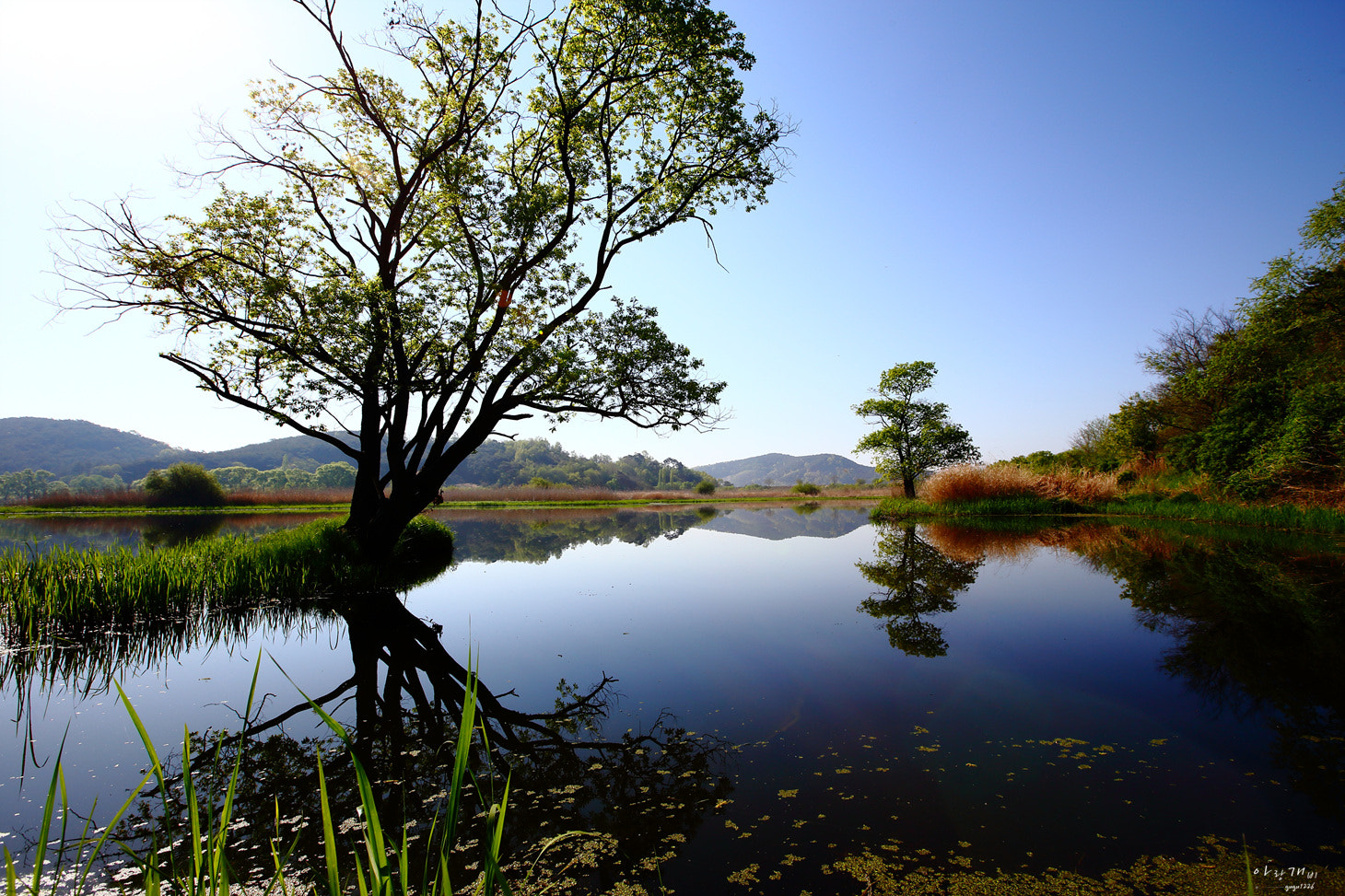
Look at the edges between open water, reeds and trees as you walk. The scene changes with water conditions, light and season. The photograph records one still-water reflection in April; neither that view nor a particular bird sighting can be scheduled as a guaranteed attraction.
Use a named arrival point
The official visitor listing gives 220 Uponeup-gil, Yueo-myeon, Changnyeong-gun. The Google map below identifies the Upo Wetland Ecology Center at that address. Use it as an arrival reference, then consult the local walking map before choosing a route. The overview pin marks the general wetland location rather than the building entrance.
For a first visit, choose an out-and-back section that fits the time you have instead of assuming you need to walk around the entire wetland. Note your departure stop or parking area and the point where you will turn back. Leave time to stand quietly and observe as well as time spent walking.
Plan your visit
| Practical detail | What to know |
|---|---|
| Arrival reference | 220 Uponeup-gil, Yueo-myeon, Changnyeong-gun, Gyeongsangnam-do. |
| Google map | The ecology centre at the official visitor address; the surrounding wetland covers a wider area. |
| Visitor inquiry | +82-55-530-1553 |
| Outdoor access | Check local notices and signs for restrictions affecting your intended path. |
| Ecology centre | Confirm its own opening days, hours and any admission arrangements separately. |
| Transport | Confirm the final local connection and your return departure before starting the walk. |
Give wildlife room and keep the visit flexible
Stay on the designated visitor paths, keep your distance from animals and use binoculars or a zoom lens rather than approaching for a photograph. Carry rubbish away and avoid disturbing vegetation along the water. A quiet pause can make a short walk more rewarding than hurrying from one supposed photo stop to another.
Treat indoor exhibitions and the outdoor walk as separate parts of the plan. A centre's closed day does not, by itself, establish the access status of every outdoor route; equally, a general description of the wetland does not confirm that a particular path is open. Check the current local information and adjust the walk to what is permitted on arrival.