This guide covers Jusanji Reservoir. It is not a complete hiking guide to Juwangsan National Park.
An agricultural reservoir with an unusual landscape
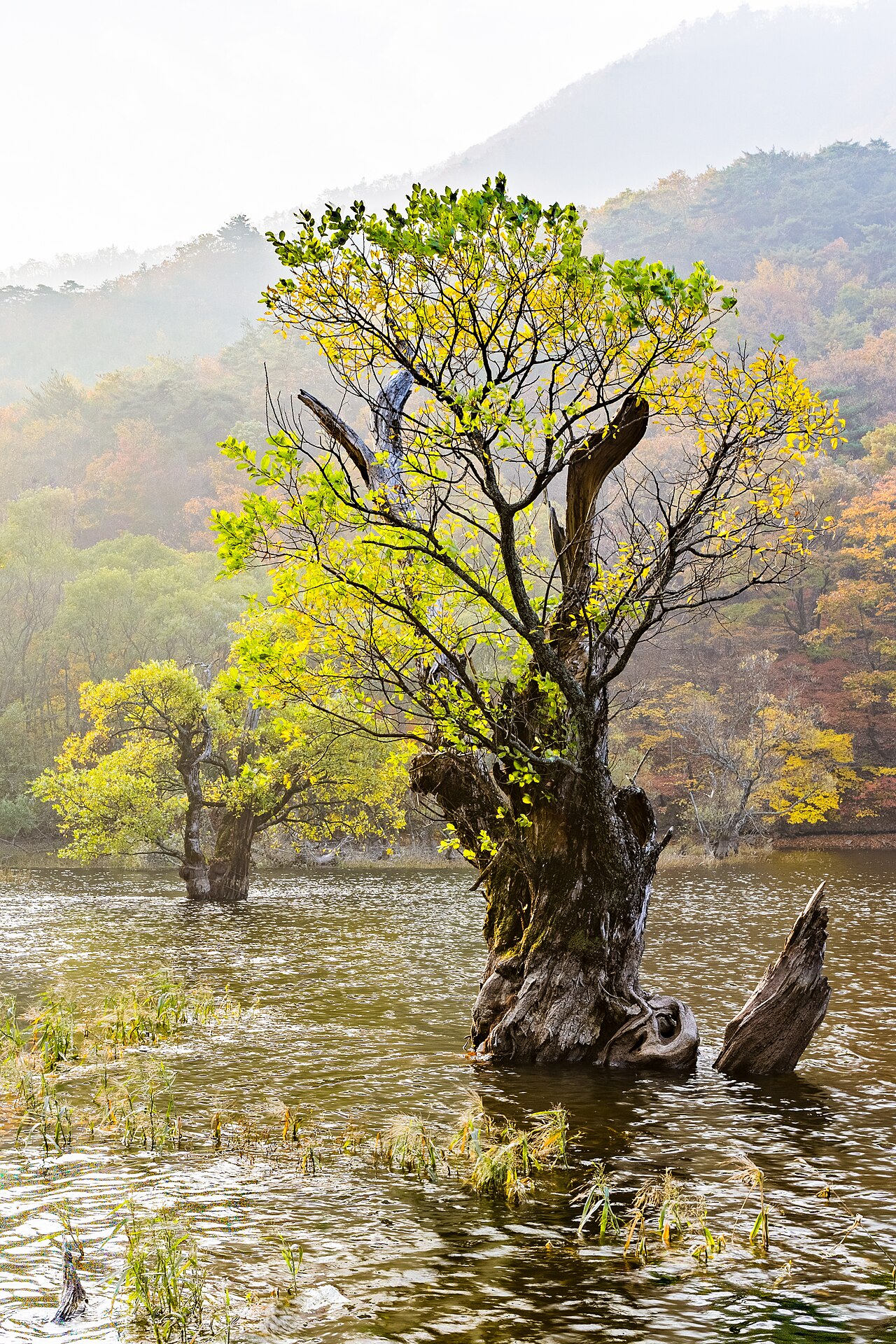
Jusanji was constructed in 1720–1721 and forms part of the Juwangsan area in Cheongsong. Its origins are practical: storing water for surrounding use. The trees rising out of the water give this small reservoir a character different from a broad mountain lake.
Rather than searching only for a famous camera angle, look at the roots, reflections and wooded slopes together. The photograph records an autumn visit; mist, leaf colour and water levels are conditions of that moment, not features that can be guaranteed when you arrive.
Choose the reservoir as a stop in its own right
Use the Jusanji-ri destination for the approach, then follow the signed visitor route to the reservoir. The map reference is the pond area, not a promise that a vehicle can reach the water's edge. Check the local route information before deciding how much walking suits your group.
If you also want to explore Juwangsan, choose a named trail and check its access separately. A visit to the reservoir does not mean you have completed a national-park circuit, and a short pond stop should not become an unplanned mountain hike late in the day.
Plan your visit
| Practical detail | What to know |
|---|---|
| Location | 73 Jusanji-ri, Juwangsan-myeon, Cheongsong-gun, Gyeongsangbuk-do. |
| Visitor inquiries | +82-54-870-6111 |
| Approach | Check the signed visitor route and current local notices; the pond pin is not a parking entrance. |
| Photography | Allow others to pass and use public viewing areas. Reflections and mist depend on conditions. |
| Wider itinerary | Plan any Juwangsan trail and transport as a separate part of the day. |
Keep the visit quiet and the water undisturbed
A useful plan is to allow time to stand still at a viewing point, then return along the public route without adding every nearby attraction. Bring water and suitable shoes; a photography stop still involves an outdoor approach and a return journey.
Stay behind barriers and keep equipment out of the water and vegetation. Do not leave the path to recreate a photograph. Check the official geopark service for current visitor information before making a special journey.