Look at the walls as well as the grounds. They explain the military role; the memorial sites ask for a quieter pace.
Government and defence inside the walls
An eupseong enclosed a local administrative centre and its residents. Seosan’s history dates Haemieupseong’s construction to 1417–1421, with major work in 1491. The later date is not the beginning of the whole town’s history.
Look for district names inscribed on some wall stones. The city explains these as evidence of construction responsibilities divided among those districts. The walls are a way to understand the work behind the fortress, not simply a frame for the park.
Two different kinds of attention
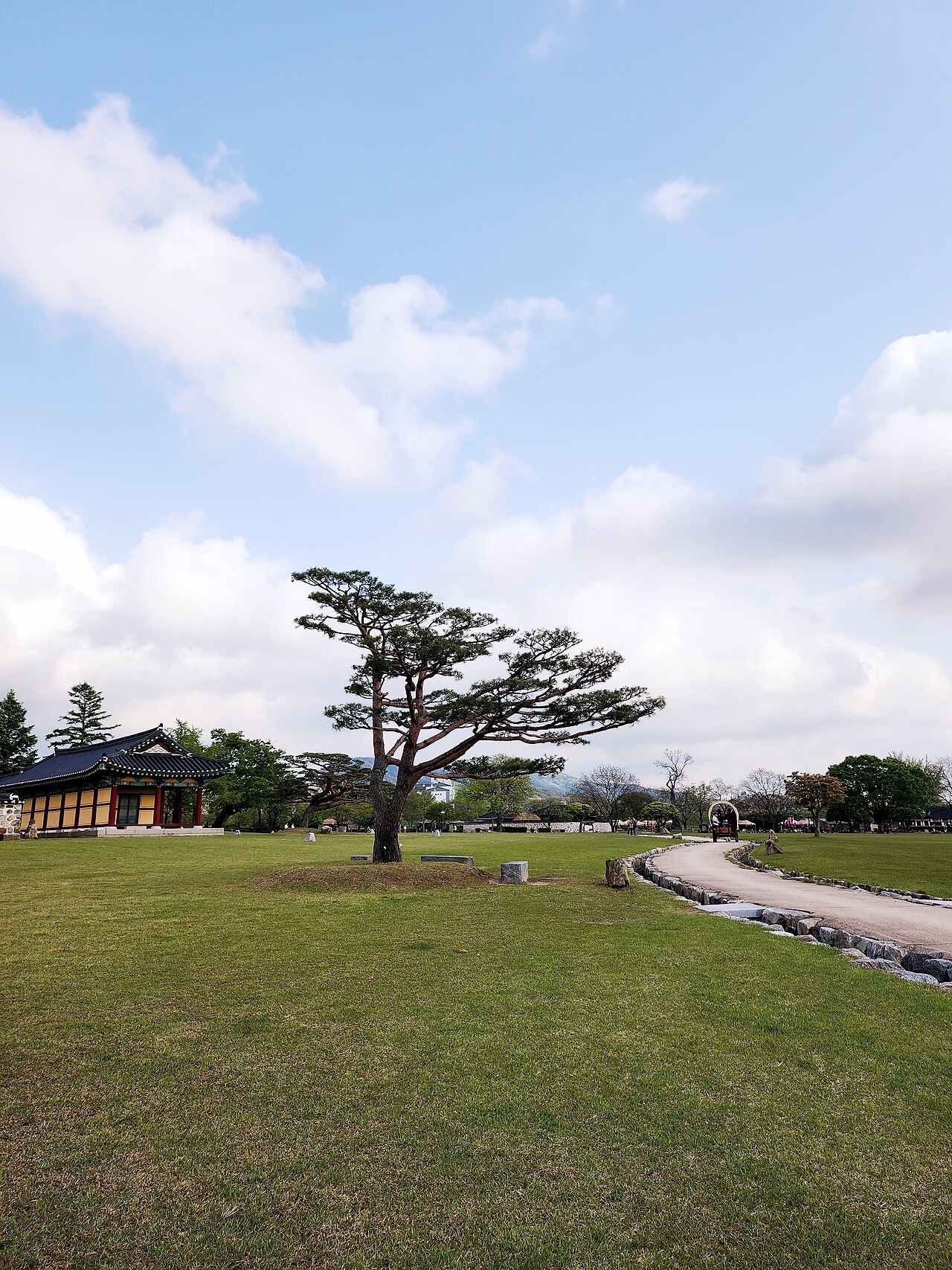
The open grounds and traditional-style buildings make this a useful introduction to a walled town. Some structures are reconstructions; do not assume that everything survives unchanged from early Joseon.
The site also records Catholic persecution in the late Joseon period. Give the prison-related area and memorial features time for reading and reflection. Keep this part of the visit separate in tone from recreational activities or playful photographs elsewhere in the enclosure.
Plan your visit
| Practical detail | What to know |
|---|---|
| Address | 143 Nammun 2-ro, Haemi-myeon, Seosan-si, Chungcheongnam-do. |
| Hours | March–October 05:00–21:00; November–February 06:00–19:00. |
| Admission | Free. |
| Opening pattern | Listed as open throughout the year; activities have their own arrangements. |
| Parking | Available. |
A simple route through the enclosure
Begin at the main entrance, explore a section of the walls, then move through the central grounds and historical buildings. Leave the memorial area enough time for reading before returning toward the entrance for a break.
Check the final local journey to Haemi and the return connection before travelling. Bring protection from sun or rain: much of the visit is outside. Seasonal demonstrations and festivals need checking for your date and are not permanent inclusions in free admission.