Choose an open palace day first. Build a central-Seoul outing around it rather than racing between distant landmarks.
Plan your visit
The palace stands in Jongno, on the north side of central Seoul. Arrive with enough time for the courtyards and buildings rather than treating the last-entry time as a suggested arrival time.
| At a glance | Details |
|---|---|
| Address | 161 Sajik-ro, Jongno-gu, Seoul · 서울특별시 종로구 사직로 161 |
| November–February | 09:00–17:00; last entry 16:00 |
| March–May & September–October | 09:00–18:00; last entry 17:00 |
| June–August | 09:00–18:30; last entry 17:30 |
| Regular closure | Tuesday. If it is a public holiday, the palace opens and closes on the next non-holiday instead. |
| Standard adult entry | KRW 3,000. Adult charging ages: foreign visitors 19–64; Korean nationals 25–64. |
| Age-based free entry | Foreign visitors 18 or younger; Korean nationals 24 or younger; visitors aged 65 or older. Bring proof of eligibility. |
| Nearest subway options | Gyeongbokgung Station, Line 3, Exit 5; or Gwanghwamun Station, Line 5, Exit 2. |
Choose it for architecture and an outdoor sense of scale
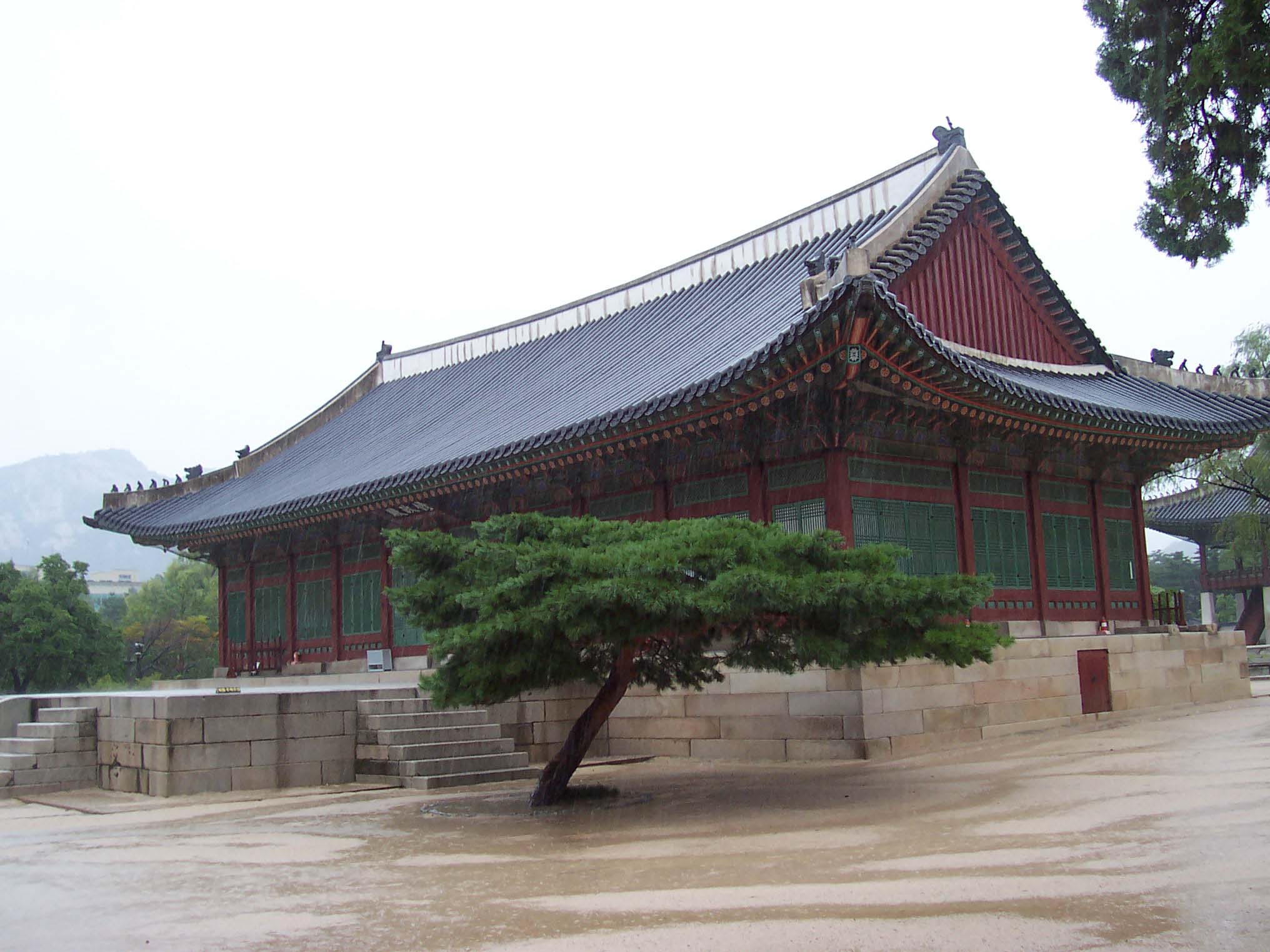
Gyeongbokgung was founded in 1395 as the main palace of the Joseon dynasty. It is one of Seoul’s five royal palaces. Come for palace architecture and grounds rather than expecting the same experience as a museum gallery.
If you are choosing between this and an indoor collection visit, let the weather, mobility needs and your interest decide. An outdoor palace day offers a different rhythm from reading labels in galleries. You do not need to fit both into one rushed morning to make a worthwhile history day.
Read the palace through its layers of history
The buildings you see today are not an untouched group dating from 1395. The palace was destroyed during the 1592 invasion, reconstructed in 1867 and severely damaged again during Japanese colonial rule. The Korea Heritage Service records a major restoration programme from the 1990s onwards. That history helps explain why restored spaces and surviving structures are both part of the visit.
Start by noticing the sequence from the main gate, Gwanghwamun, into the inner courts. The official palace guide identifies Geunjeongjeon Hall, Gyeonghoeru Pavilion, the royal living quarters and Hyangwonjeong Pavilion as distinct areas to explore. Choose a few, using the current palace map and access signs rather than trying to follow every name on a list.
For a first visit, our suggested sequence is the main entrance and ceremonial courts first, then a pavilion area if access and your energy allow. Pause to compare the scale of a formal court with the more intimate residential spaces. This is a flexible viewing approach, not a promise that every building interior or pavilion is open without a separate arrangement.
Check the day and type of visit
Seoul Tourism lists Tuesday as the regular closure day, with public-holiday exceptions. Opening hours vary by season and last entry is earlier than closing. Confirm the actual date with the official palace information before setting out; do not build the day around a closing time copied from an old itinerary.
Daytime entry, a special night opening and an organised programme are separate things to check. A night-event photograph is not proof you can enter that evening. If you want to wear hanbok, check the palace’s current admission and clothing conditions before paying for a rental. Rental cost and palace admission are separate decisions.
Keep the next stop in the same part of Seoul
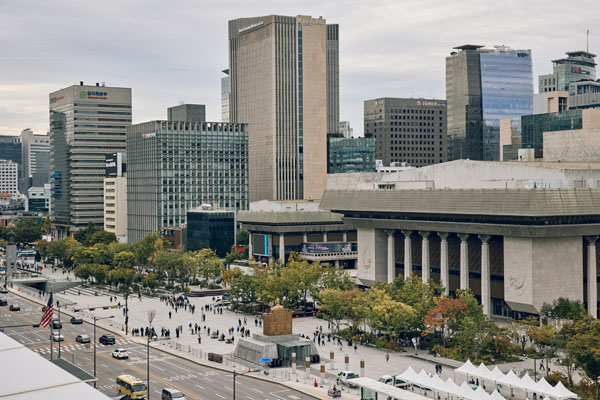
A simple planning outline is palace first, a meal in the surrounding central area, then a short walk around Gwanghwamun if you still want more outdoor time. This is an editorial route suggestion, not a booked tour or a promise about walking time. Check the route against your chosen entrance and any street restrictions.
The National Museum of Korea is in Yongsan, not beside the palace. Save it for a separate outing or budget a real transfer if you deliberately combine them. One anchor with an optional second stop leaves space for photography, a break or an earlier finish.
Before leaving your accommodation
Wear shoes suitable for a long outdoor visit and choose weather protection for the actual day. Travel light if you plan to rent clothing; work out what happens to your bags. Keep your return route handy rather than assuming you will exit at the same point.
Follow barriers and staff instructions around historic structures. If a performance or tour is essential to your visit, check its own timetable and cancellation information. Treat the palace itself as the main visit, with a programme as an extra only when confirmed.
- Check the official date, seasonal hours and last entry.
- Confirm any separate programme or night-opening ticket.
- Choose a nearby meal and an optional walk.
- Keep an indoor alternative for unsuitable weather.