Choose daylight and comfortable shoes. The fortress, royal tombs and museum are separate stops with separate travel time.
A fortress above an ancient capital
Gongju was the Baekje capital, known as Ungjin, from 475 to 538. Gongsanseong stood above the Geumgang River. Later dynasties continued to use the area, so today’s remains reflect a long history rather than one untouched moment in the fifth century.
It belongs to the UNESCO-listed Baekje Historic Areas, whose components are spread across Gongju, Buyeo and Iksan. Begin with the landscape: the relationship between the hillside, river and city helps explain the fortress’s position.
Look beyond the gateway
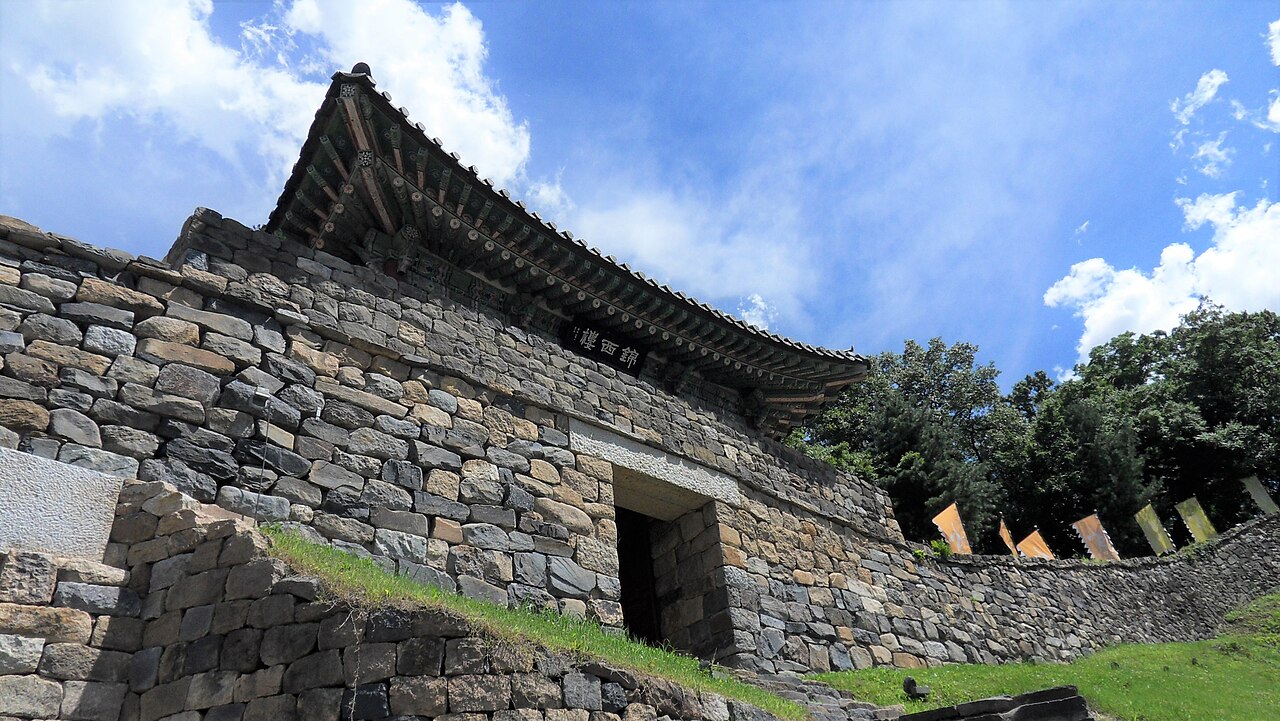
Geumseoru makes a strong first impression, but the visit is also about views along the fortifications. Follow the signed public route and stop where there is room to look toward the river and city. The changing levels are part of the experience.
Do not treat this as a flat urban promenade. A shorter section with a return by the same route can suit your group better than completing every part. Leave time for rests and photographs instead of measuring the visit only by distance.
Plan your visit
| Practical detail | What to know |
|---|---|
| Address | 280 Ungjin-ro, Gongju-si, Chungcheongnam-do. |
| Hours | March–October 09:00–18:00; November–February 09:00–17:00. |
| Last entry | 30 minutes before closing. |
| Closed | New Year’s Day and the day of Seollal and Chuseok. |
| Standard admission | Adult KRW 3,000; teenager KRW 2,000; child KRW 1,000. |
A manageable Gongju day
Make the fortress your main walking stop. If you want more Baekje history, add the Tomb of King Muryeong and Royal Tombs or Gongju National Museum as a separate part of the day. Include time for the transfer and each venue’s opening arrangements.
Avoid collecting all eight heritage components in one outing: they belong to several cities. In winter, start earlier because the visiting day is shorter. An illuminated outside view does not mean that the whole wall route is open at night.